Malaysia is a upper-middle-income economy of around 33 million people that has positioned itself as Southeast Asia’s leading hub for semiconductor fabrication, Islamic finance, and low-cost aviation. The Penang and Selangor industrial corridors host major global chipmakers and electronics supply chains, while Kuala Lumpur’s sukuk market and Bursa Malaysia’s listed companies make the country one of the region’s most liquid capital markets. Malaysia Airlines and AirAsia together connect much of Asia–Pacific, and the Sepang International Circuit has cemented the country’s role in global motorsport.
ASEAN’s logistics and freight signals are now the most informative leading indicators for H2 growth — they move weeks ahead of trade volumes, months ahead of GDP revisions, and the differential across economies is already in this season’s order books.
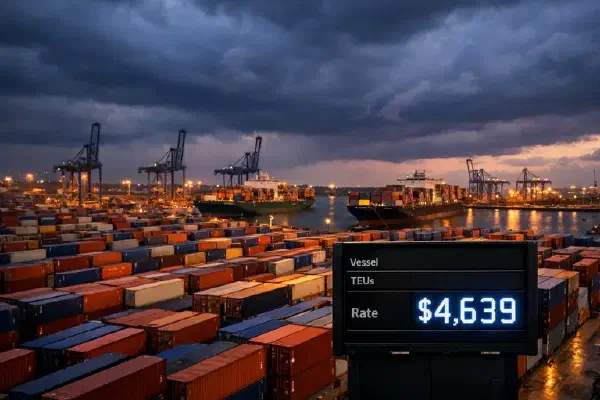
As Q3 freight rates hit 22-month highs, Malaysia’s multi-modal logistics infrastructure and lower cost burden per export dollar are re-rating the country’s electronics supply chain proposition — but the advantage belongs more to its multinational tier than to the SME supplier base.
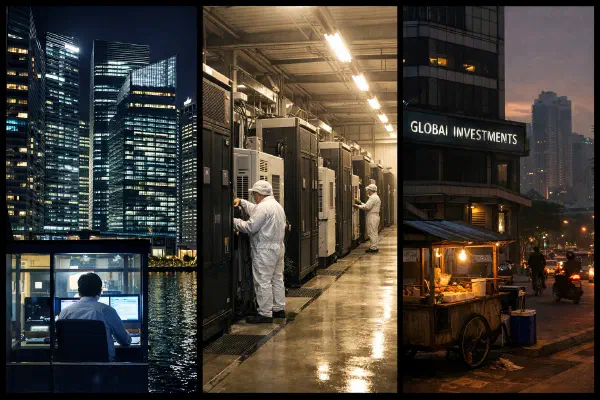
Three simultaneous repricing events are settling ASEAN’s H2 capital map. Thailand has emerged as the surprise winner — not through tourism or domestic consumption, but through AI data centre infrastructure. Indonesia’s governance premium is now a hard market fact. Singapore’s institutional moat is actively widening. The H2 growth competition was won on institutional quality, not growth rate.
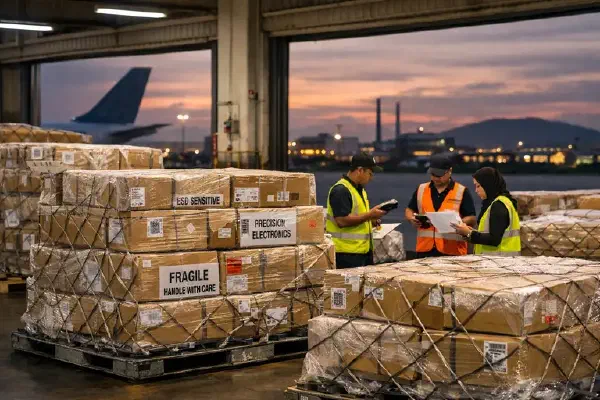
Malaysia is pushing up the value ladder into semiconductor IP and advanced design while Vietnam is racing to close a localisation deficit in volume electronics manufacturing. Both strategies are legitimate. The competitive zone where they genuinely collide — advanced PCB, compound subassembly, precision electronics components — is where global supply chain investment decisions will be made and where both countries’ industrial policy ambitions are most directly tested.
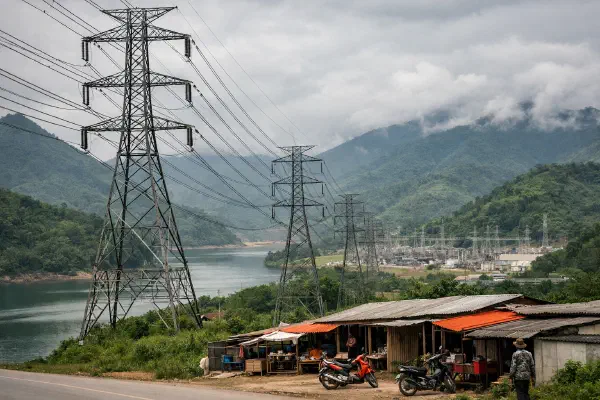
Laos is becoming more important to ASEAN’s power grid, but export scale alone will not repair the balance sheet unless Laos captures more value from transmission, PPAs, and domestic grid reform.
Commercial operators are retreating from ASEAN sports rights. Telecoms and state broadcasters are filling the gap. The structural repricing of sports sponsorship is now underway — and it will reshape who sponsors ASEAN sport, at what price, and through what channel.
This week’s ASEAN signal is not about growth; it is about systems integration — the markets where fintech infrastructure and industrial throughput are closing into a single investable stack are attracting better capital, on better terms, than those where the two layers are still moving on separate calendars.
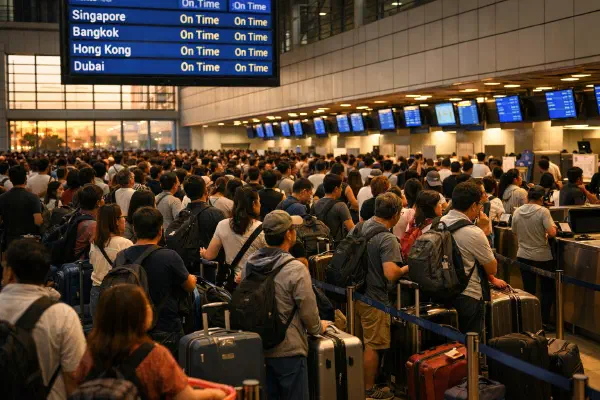
Airlines across Southeast Asia are reshaping regional mobility by deploying new aircraft to secondary cities, bypassing saturated megahubs ahead of the Q3 peak.
Philippine aviation demand is surging but infrastructure constraints and visa barriers mean the benefits are increasingly captured by ASEAN competitors with better capacity to serve high-yield travellers.