Malaysia is a upper-middle-income economy of around 33 million people that has positioned itself as Southeast Asia’s leading hub for semiconductor fabrication, Islamic finance, and low-cost aviation. The Penang and Selangor industrial corridors host major global chipmakers and electronics supply chains, while Kuala Lumpur’s sukuk market and Bursa Malaysia’s listed companies make the country one of the region’s most liquid capital markets. Malaysia Airlines and AirAsia together connect much of Asia–Pacific, and the Sepang International Circuit has cemented the country’s role in global motorsport.
Vietnam’s export recovery is real, but logistics costs at 16–20% of GDP mean every freight-rate swing hits exporters harder here than anywhere else in ASEAN — and the US-Iran peace deal won’t deliver a clean cost reset.
ASEAN loan growth numbers are hiding a deeper liquidity stress in the deposit base — and when liquidity tightens, loan growth is the last metric to turn.
Singapore’s institutional premium model and Malaysia’s consumer ecosystem model represent two fundamentally different answers to the same question — how to turn digital payments ubiquity into profit — and the gap between them is reshaping fintech strategy across ASEAN.
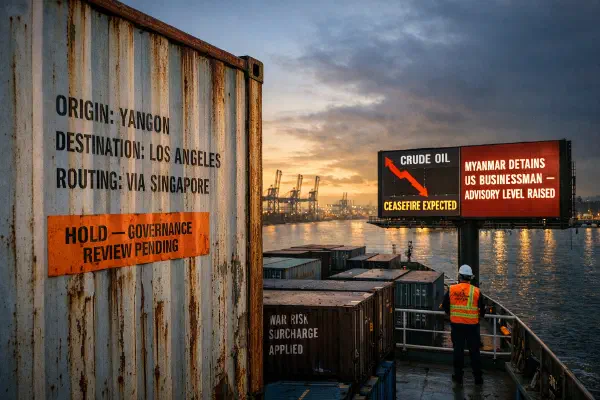
The US-Iran peace deal is the best supply chain news ASEAN frontier markets have had all year. But governance risk is now repricing upward on its own axis, and the net premium may not fall as much as logistics alone would suggest.
Brunei is taking the right institutional steps toward post-hydrocarbon diversification, but the pieces aren’t yet connected, the sovereign wealth lever remains under-deployed, and the Iran war windfall is both the best enabler and the biggest trap.
ASEAN’s fiscal divergence in 2026 is not primarily about who exports oil. It’s about who made subsidy reform calls in the quiet years before the shock — and Malaysia and the Philippines are holding more fiscal cards going into H2 than Indonesia or Thailand.
Cross-border QR payments are restructuring ASEAN’s micro-capital flows in real time — and Project Nexus, linking 1.7 billion people, is the moment the experiment becomes infrastructure.
Malaysia’s 2026 story is becoming more internally driven than many investors expected. Domestic demand, benign inflation, a stronger ringgit and a still-active investment cycle are giving the country a more durable growth floor even as tariffs, commodity volatility and trade uncertainty cloud the external outlook.
Singapore’s Q1 2026 GDP beat tells only part of the story. The more important development is a compounding feedback loop between AI infrastructure investment and financial services productivity — one the government is actively designing, not merely observing.
This week’s biggest Southeast Asia stories show a region attracting capital at scale while still struggling to keep enough value, capability, and resilience at home.
This week’s most important Southeast Asia fintech story is that macro stress is turning payment infrastructure from a convenience feature into an economic resilience tool.
Three signals from one week: Vietnam becomes SEA’s first country with a binding AI law, Money20/20’s APAC report declares the region has moved from pilots to production, and the UBS OneASEAN Summit puts 4.9% GDP growth on the record.