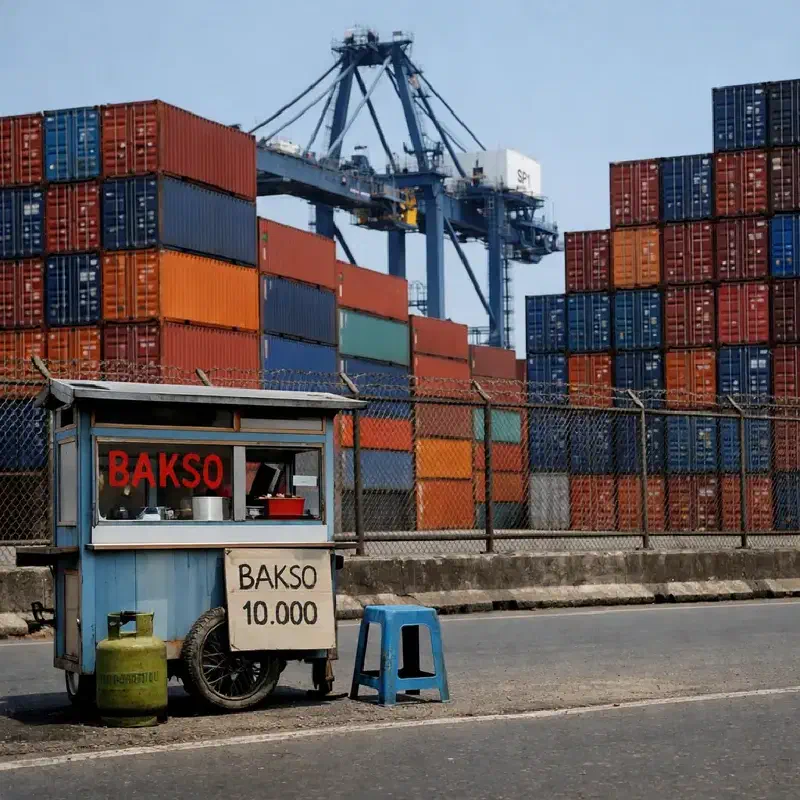
Indonesia is Southeast Asia’s largest economy and the world’s fourth most populous country, with around 280 million people spread across more than 17,000 islands. Its commodity wealth — nickel, palm oil, coal, and copper — underpins a resource-processing industrial base, while a fast-growing domestic consumer market and vibrant fintech sector are reshaping finance and retail. Jakarta remains the primary business hub ahead of a phased capital relocation to Nusantara in East Kalimantan, and the archipelago’s diversity fuels one of the region’s most compelling travel propositions.
Southeast Asia’s biggest economic stories this week share one pattern: governments are no longer just inviting capital — they are redesigning where margins sit.
Prabowo’s 8% commission cap is a labor story on the surface. Underneath it is a systematic nationalization of value capture in Indonesia’s platform economy — and Danantara’s dual role as owner and regulator is the most consequential development in SEA tech this year.
Money20/20 Asia called it: the infrastructure era is done. The BIS called out the structural fragility of the dollar-denominated rails it runs on. These are the same story, and OCBC’s dual move this week is the most honest answer either side has offered.
This week: Kredivo buys its way into Vietnam via the Timo acquisition, an IMF report confirms Thailand leads ASEAN in digital payments while scam losses mount, and Grab’s proposed voting rights restructure raises hard governance questions for the region’s largest super-app.
Three signals from one week: Vietnam becomes SEA’s first country with a binding AI law, Money20/20’s APAC report declares the region has moved from pilots to production, and the UBS OneASEAN Summit puts 4.9% GDP growth on the record.
DBS-Visa AI agent payments, the Philippines’ dual IPO race, and Indonesia’s new digital innovation hub all point to the same quiet shift: Southeast Asia is building financial infrastructure, not just fintech apps.